
Geopolitics and Market Demand Intertwine: Aluminum Market Enters an Era of High Volatility
I. Market Review: A Surge Beyond Expectations
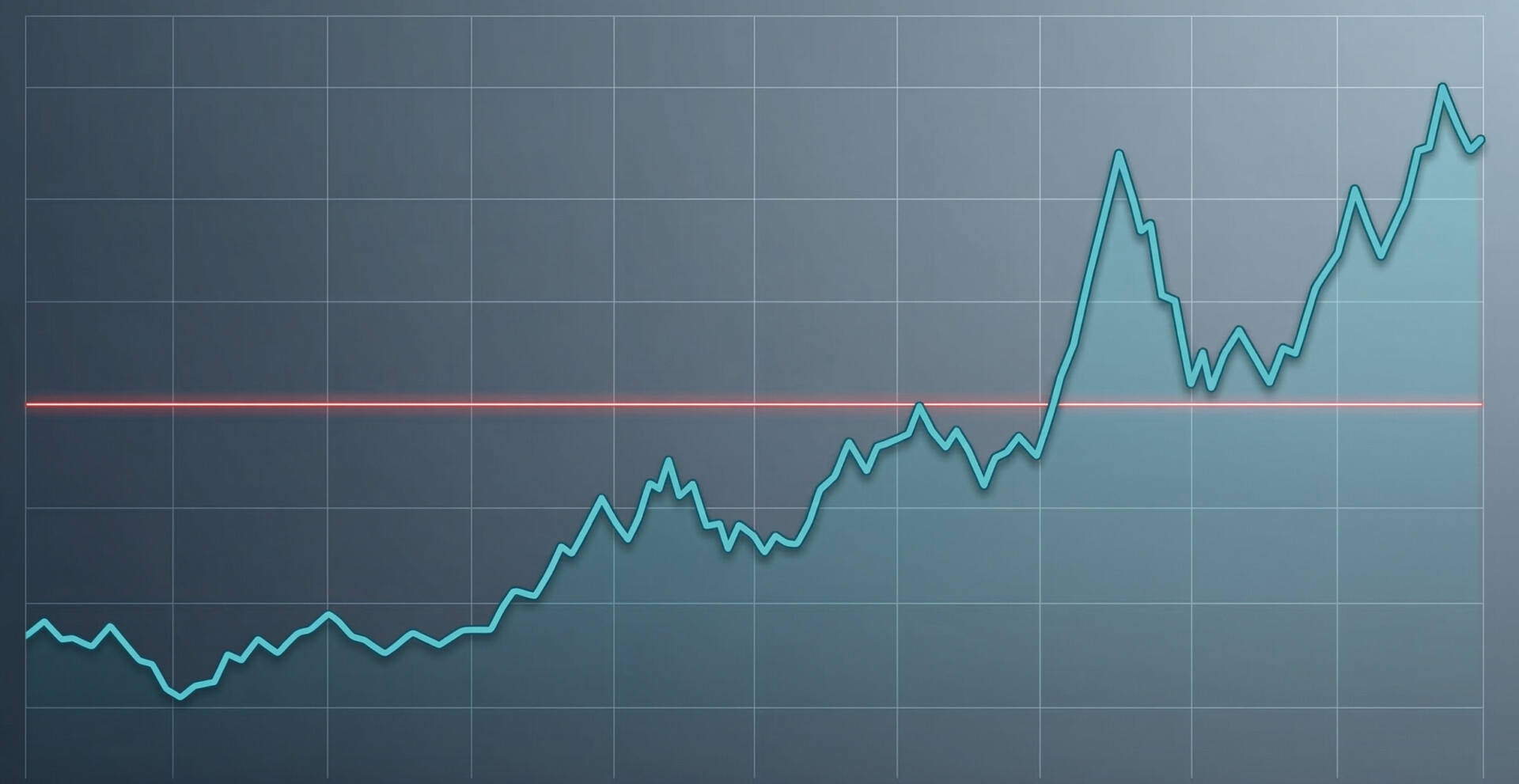
The international aluminum market has heated up rapidly in recent weeks. Driven by the dual impact of escalating Middle East conflicts and the functional blockade of the Strait of Hormuz, LME aluminum benchmark prices surged past the $3,400/tonne mark in early March 2026. On March 9, prices climbed to $3,544/tonne, marking a four-year high—a significant jump from the roughly $3,100 level seen at the start of the year. This rally signals a swift transition from a “tight balance” to a new market paradigm characterized by supply disruptions, spot tightness, and extreme price sensitivity.
II. The Trigger: US-Israeli Strikes on Iran and the Hormuz Blockade
The immediate catalyst for this surge was the military strike launched by the U.S. and Israel against Iran on February 28, followed by Iranian retaliation that brought commercial shipping in the Strait of Hormuz to a near standstill. This waterway facilitates the export of over 5 million tonnes of aluminum annually from smelters in Bahrain, Qatar, Saudi Arabia, and the UAE, while also serving as a critical route for inbound bauxite and alumina. Reuters notes that market panic is far from abstract; it is a visceral reaction to the Western aluminum supply chain’s heavy reliance on Persian Gulf metal flows.
Notably, while the Gulf Cooperation Council (GCC) region accounts for approximately 8–9% of global primary aluminum production, its share of international trade is far higher due to a high export-to-consumption ratio.
III. Supply Shock: From Logistics Bottlenecks to Smelter Shutdowns
Supply-side shocks have moved from theoretical risks to established facts:
Aluminium Bahrain (Alba): The world’s largest single-site smelter outside of China issued a force majeure notice to customers on March 4. While the smelting facilities themselves remain undamaged, the declaration was necessitated by the inability to ship products through the Strait of Hormuz.
Qatalum (Qatar): A joint venture between Norsk Hydro and QatarEnergy (648k tonnes annual capacity) began a controlled shutdown on March 3 due to natural gas supply disruptions. The process is expected to be completed by late March. Norsk Hydro has issued force majeure notices, and industry experts estimate a full restart could take 6 to 12 months, indicating a long-term disruption.
Emirates Global Aluminium (EGA): The company stated it is currently utilizing offshore inventory to mitigate loading delays.
Combined, the capacity impacted by logistics or shutdown risks totals approximately 2.27 million tonnes, representing roughly 3% of global smelting capacity.
IV. China Can No Longer Be the “Firefighter”
Crucially, the global market can no longer rely on China to fill the supply gap. Chinese aluminum production is hovering at its 45-million-tonne policy cap. Furthermore, other global buffers have thinned: the Grundartangi smelter in Iceland cut production by two-thirds in late October 2025 due to equipment failure (with full recovery expected to take 11–12 months), and the Mozal plant in Mozambique is scheduled to enter “care and maintenance” starting mid-March 2026.
V. Demand Floor: Structural Support from the Energy Transition
On the demand side, aluminum remains resilient as a core material for electric vehicles (EVs), power equipment, digital infrastructure, and low-carbon technologies. ING had previously forecasted a 200,000-tonne deficit for 2026; however, if the Mozal shutdown proceeds, that deficit could widen to 600,000 tonnes. The Middle East crisis further reinforces this structural supply-demand imbalance, supporting a “stronger for longer” price outlook with heightened volatility.
VI. Outlook: High-Level Volatility and Upgraded Price Targets
Banking and research institutions have rapidly revised their forecasts upward:
Citigroup: Warns that prices could hit $4,000/tonne if supply disruptions persist.
Goldman Sachs: Sets a target of $3,600/tonne if Middle East production remains disrupted for at least one month.
ING Group: Suggests prices could briefly spike above $4,000/tonne in a severe disruption scenario.
BMI (Fitch Solutions): Predicts that as long as the shipping risks in the Strait of Hormuz and the restart schedules for Middle East smelters remain unclear, aluminum prices will remain range-bound at elevated levels.
Optimistic remarks from Donald Trump on March 9 briefly eased market panic, pulling prices back from intraday highs, yet they remain significantly above pre-conflict levels.
Overall, the current strength of the aluminum market is not merely a result of short-term speculation. It is a composite product of geopolitical conflict, shipping bottlenecks, smelter shutdowns, structural supply constraints, and energy transition demands. For downstream procurement managers, supply security and hedging arrangements have now superseded “lowest cost” as the primary management priority.